
TDS on Influencer Income in India: Rates, Rules & Brand Deals
Your ₹1,00,000 deal pays out ₹90,000, that's TDS, not a loss. What gets deducted, the free-product trap most creators miss, and how to claim it all back at filing time.
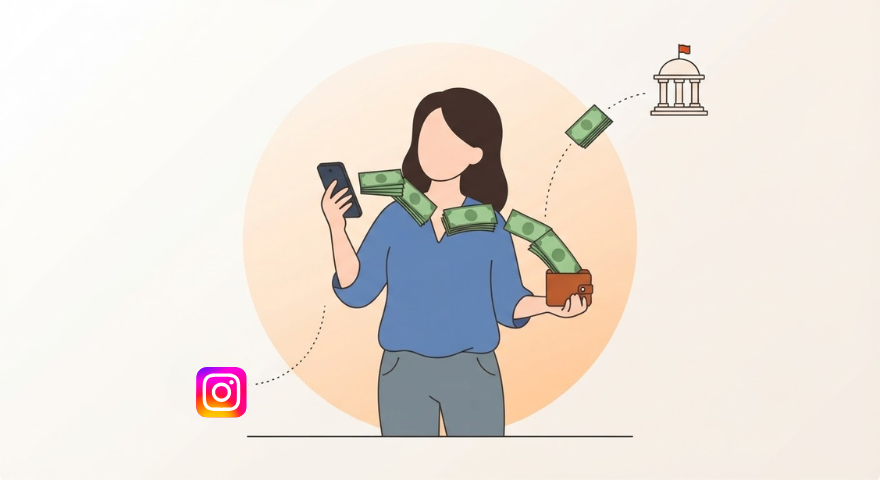
A brand agrees to pay you ₹1,00,000 for a campaign. The money lands. You check your account: ₹90,000. Nothing went wrong. The brand did exactly what the law requires, they deducted TDS (Tax Deducted at Source) before paying you. That missing ₹10,000 isn't lost. But if you don't know how it works, you'll either panic, undercharge, or forget to claim it back.
A brand or agency deducts TDS before paying a creator, the amount deducted is generally deposited against the creator's PAN rather than simply disappearing from the deal value. The applicable TDS section, rate and treatment depend on the nature of the payment, including whether the arrangement involves professional fees, benefits or perquisites.
What is TDS?
TDS is tax the payer deducts before paying you, and deposits with the government on your behalf. It's not an extra tax, it's an advance on the income tax you'd owe anyway.
When a brand (a registered business) pays you for a service, they're required to withhold a percentage and send it to the tax department against your PAN. You get a smaller payout now, and a credit you can claim when you file your return.
The Rate: How Much Gets Deducted?
The deduction depends on which section the brand applies:
- Under 194J (professional services): usually 10% of the invoice value
- Under 194C (contracts): usually 1–2%
- If you haven't given the brand your PAN: 20% (much higher, always share your PAN)
So on a ₹1,00,000 deal at 10%, the brand deducts ₹10,000 and pays you ₹90,000. They deposit that ₹10,000 with the government against your PAN.
The Part Creators Miss: TDS on Free Products (Barter)
This one catches almost everyone. When a brand sends you a free product, a ₹40,000 phone, a hotel stay, a PR box, to post about it, that can count as taxable value. And the brand may be required to deduct TDS on it.
Since this is a barter (you got a product, not cash), the brand can't deduct tax from a payment that doesn't exist. So they either ask you to pay the TDS amount in cash, or they gross it up. Either way, that "free" gift may have a tax cost attached.
If you take free products regularly, this adds up fast and ignoring it is a common way creators end up with a tax notice.
How to Get Your TDS Back?
The deducted amount is sitting with the government against your PAN. Here's how you reclaim it:
- Check Form 26AS / AIS: Your tax credit statement (on the income tax portal) shows every rupee of TDS deducted against your PAN. Every brand that deducted should appear here.
- Get Form 16A: The brand issues this TDS certificate each quarter. It's your proof of deduction. Ask for it if they don't send it.
- Claim credit when you file your ITR: The TDS already paid is adjusted against your total tax liability for the year.
- Get a refund if excess: If the TDS deducted is more than your actual tax liability, the difference is refunded to you.
Why This Changes How You Price?
TDS isn't a cost, you get it back but instead it is a cash-flow hit. You quoted ₹1,00,000 and expected ₹1,00,000; you got ₹90,000 now and the rest at refund time, months later.
Two things to do:
- Quote and invoice the full value (₹1,00,000). Never quote net-of-TDS, the deduction is the brand's job, and you claim it back.
- Plan cash flow around the gap. If you're living deal-to-deal, remember the last chunk arrives at refund time, not on payment day.
International Brands: Do They Deduct Indian TDS?
Usually no. A foreign brand with no presence in India generally isn't deducting Indian TDS, so a USD brand deal often lands without any TDS taken out.
But that doesn't mean it's tax-free. You still owe income tax on that foreign income; there's just no advance TDS credit sitting in your 26AS for it. That makes tracking it yourself even more important, nothing else is keeping score.
Worked Example :
Suppose a brand agrees to pay ₹1,00,000 for a campaign and deducts ₹10,000 as TDS. The creator receives ₹90,000 in the bank, while ₹10,000 is deposited against the creator’s PAN.
| Brand deal value | ₹1,00,000 |
|---|---|
| TDS deducted | ₹10,000 |
| Amount received | ₹90,000 |
| Gross income to track | ₹1,00,000 |
Summary table :
| Question | Answer |
|---|---|
| Why did the brand deduct TDS? | Because certain payments are subject to tax deduction at source |
| Is TDS an extra tax? | Not necessarily; it is generally a tax credit against your final liability |
| Where can I see it? | In the relevant tax records such as Form 26AS/AIS, as applicable |
| Can I claim it back? | Excess TDS may result in a refund after the final tax liability is determined |
| Does the same rule apply to every brand deal? | No, the applicable provision depends on the nature of the transaction |
Where Variabl Fits in!
TDS is scattered across every brand you work with different rates, different quarters, different certificates. Reconciling what was deducted against what shows in your 26AS is where creators lose money (unclaimed TDS is just a donation to the government). Variabl tracks each brand payment alongside the TDS taken out, flags what you're owed, and keeps your deal records ready to match against your tax credit statement at filing time, so every rupee deducted actually comes back to you.
Related Reads in this Guide :
- Do Instagram Influencers need GST?
- How should Influencers Invoice Brands and Agencies in India?
- Finance for Instagram Influencers and Creators in India

Frequently Asked Questions - FAQs
What if the brand deducts the wrong amount of TDS?
First check what was deducted, which provision was used and whether the amount appears correctly against your PAN. If something does not match, raise it with the brand or agency rather than waiting until you file your return.
Is TDS the same as GST?
No, they are completely different. GST is connected to the service you provide and how you invoice it. TDS is the tax that the person paying you may deduct before releasing your payment. This means GST and TDS can be both relevant to the same brand deal.
Why did my brand pay less than the agreed amount?
The brand deducted TDS (Tax Deducted at Source) before paying you - usually around 10% on a 1,00,000/- deal, so 90,000/- lands. It's not a fee or a loss; it's an advance on the income tax you'd owe anyway, deposited with the government against your PAN. You can claim it back when you file your return.
What TDS rate applies in Influencer Brand deals?
It depends on which section that brand applies - commonly 10% under 194J (professional servies) or 1-2% under 194C (contracts). If you haven't given the brand your PAN, it jumps to 20% so always share your PAN.
How do I get my TDS back as an Influencer?
Check your Form 26AS/AIS on the income tax portal - every rupee deducted against your PAN shows there. Get Form 16A (the TDS certificate) from each brand as proof, then claim the credit when you file your ITR. If the TDS deducted is more than your actual tax liability, the excess is refunded to you.
What is Form 26AS and why does it matter for Creators and Influencers?
It's your tax credit statement - a running record of all TDS deducted against your PAN across every brand you worked with. It's how you verify what was actually deposited and make sure you claim every rupee. Unclaimed TDS that never gets matched is effectively a donation to the government.
Should I record the amount I received or the amount before TDS?
Track the gross amount before TDS as your income and the TDS separately as tax deducted. If your fee was ₹1,00,000 and ₹90,000 reached your bank after ₹10,000 of TDS, simply recording ₹90,000 as income would understate what you actually earned.
This article is for general information and doesn't constitute individual tax advice and financial advice, every individual's situation differs based on total income, client mix, and whether income includes international sources.