
Tax for YouTubers in India: GST, TDS & Income Tax (2026)
AdSense in dollars, brand deals with tax deducted, affiliate payouts and a UPI transfer for a collab. How to turn a creator's income into one clear number.

YouTuber's in India maybe start out as hobbyists but somewhere along the lines, this turns into a full blown business. They start dealing with brands, other collabs and app payouts. This continues all while scripting, filming and editing your next video. You are running a business, it just does not always feel like one because the finance side of it has never been properly set up.
And the result? You know the subscriber count until the last digit, but you do not always know what exactly you earned last month - after all the deductions, payments and brand deal disputes.
This article talks about the proper way to track your finances using proper tools and techniques.
So How Should YouTubers in India Manage Their Finances?
Finance for YouTubers in India means managing income from at least four different income streams at once - AdSense(foreign currency, TDS free but taxable), brand deals and sponsorships ( INR invoices, TDS deductions and GST if required), channel memberships and Super Chats (platform payouts), and paid content, courses or consulting on the side.
A proper Finance System for a YouTuber needs to handle all of this together, not in separate apps, spreadsheets or even WhatsApp messages. Clients, invoices, payment tracking, income from multiple sources, documents, GST, income tax and your CA should talk to each other. That is the baseline.
How Most Indian Youtubers Actually Manage Their Money Right Now!
- AdSense income lands in the bank account, sometimes monthly, sometimes delayed and the amount always varies with exchange rates. No invoices are created for this, but this is still a taxable income.
- Brand Deals are negotiated over Instagram DM'S or emails, the amount is agreed verbally and invoices sent as PDF's on either Canva or Word. This comes sometimes with GST, sometimes without.
- Brands deduct TDS at 10% before paying. The TDS certificate comes months later and sometimes only after repeated follow-ups.
- Payments are tracked in Notes app or maybe a WhatsApp message to yourself or an Excel sheet that is three months out of date.
- Channel Memberships and Super Chats are platform payouts that show up in a dashboard but rarely make it into any consolidated income review.
- Taxes are handled once a year, in a rush, by sending your CA a mix of bank statements, random invoice and screenshots.
None if this is unusual but none of this is a system either.
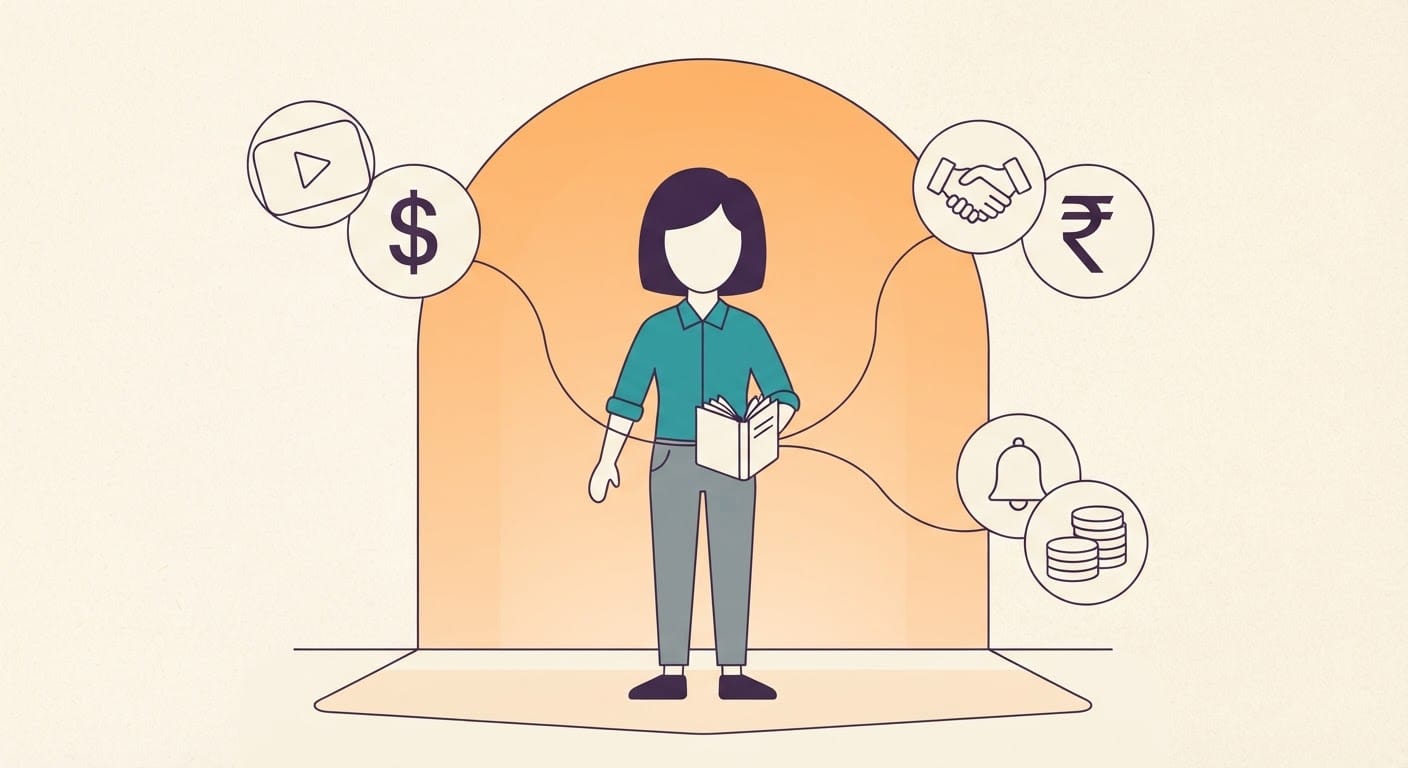
The Chaos and Messiness increases Over-time
The first few brand deals are manageable, you remember who paid and who did not and what you roughly earned. But by the time you have done 20 or 30 deals across a year, things start to slip. A brand paid 80% and 20% is still remaining somewhere across the chat thread. Another Brand sent the payment without TDS deduction and you have to raise an invoice. Once a deal was in USD and landed in your foreign currency account, and you are not sure if it needs to be declared under FEMA rules or not. Your advance tax for Q3 was calculated based on income that did not include three brand deals you forgot to count.
By march, your CA is asking for documents you have not organized since April and you are scrambling to find TDS certificates and matching payment invoices. You are trying to reconstruct your income from 12 months of bank credits and app notifications.
This is not a tax problem, it's a tracking problem.
Why Invoicing should be your first step for managing your finances
Most Creators think that invoicing is boring admin task at the end of each deal. Send the invoice, collect the money and then move on. But the invoice is where your entire finance workflow begins.
A properly raised invoice tells you -
- Who owes you money and how much (in which currency).
- Whether or not GST applies and what TDS rate to expect.
- When the payment is due.
Without of all this, you are chasing payments without a paper trail. You are filing GST returns on incomplete data and you never are quite sure what is actually outstanding.
When invoicing is clean, everything becomes significantly easier and when it is messy, everything else is too.

What A proper Finance System for a YouTuber Should Look Like :
- Client and Contacts - Every brand. agency or collaborator you invoice should live in one place, not in your phone contacts, email threads and DM's separately.
- Invoicing - You should be able to raise GST- compliant invoices in minutes in INR or any other currency, with the right TDS rate already applied.
- Payment tracking - Invoices should show status (raised, partially paid, fully paid, overdue), so you always know what is outstanding without ever opening a spreadsheet.
- Automated Follow-ups - Payment reminders should go automatically when a due date approaches and not when you remember to send them
- TDS and GST tracking - TDS deducted by brands should be tracked against invoices so the reconciliation is easy. GST liability should be calculated as you invoice, not after the quarter closes.
- Document Storage - All your documents need to be stored in one place and accessible when a CA needs them.
How Variabl Helps Build This System!
Variabl is a connected finance platform built specifically for independent Indian professionals including youtubers, creators and digital entrepreneurs who earn from multiple sources and manage compliance on their own.
It brings together the parts of your finance life that currently lives in separate places :
- Raise GST -compliant invoices for brand deals in minutes, with the right HSN codes, TDS rates and currency support from International Deals
- Track every Invoice Status, so you don't have to chase your own notes.
- AI assistant "Maya", that tracks payments, invoices and follow-ups.
- A real CA signing off your filings who is also available for any support or guidance needed.
- Store all your financial documents in one centralized place.
The goal isn't another invoicing app, it's the layer that connects invoicing, income tracking, documents and CA reviewed compliance, so your creation practice runs like the business it already is.
You can Learn more on Variabl.in !

Also check out -
FAQ'S - Frequently Asked Questions
What Documents should a YouTuber maintain throughout the year for tax filing?
The core documents include - all invoices raised for brand deals, TDS certificates. AdSense Payment statements from each month, bank statements for all accounts with channel income, expense bill for equipment, software and other business purchases and GST return copes if you are registered.
Storing these in one organized place through the year rather than collecting them in March is one of the most practical things any creator can do to make tax season less stressful.
What is TDS on brand deals and how does it work for Youtubers?
When a brand or an agency pays you for a sponsored video, product integration or any other professional service, they are typically required to deduct TDS at 10% of the payment before transferring the balance.
Let's take an example, if a deal is for 1,00,000/-, the brand pays you 90,000/- and deposits 10,000/- with the government as TDS on your behalf. This TDS should appear in your form 26AS, you can claim it as a credit when filing your income tax return, reducing your tax liability. They key is to track every TDS deduction at the time of each payment and collect TDS certificates from each brand.
Do Youtubers need to register for GST in India?
If your total revenue from all services exceeds 20 Lakhs in a financial year, GST registration is typically required. The threshold maybe 10 Lakhs in certain special category states. Once registered, you must raise GST invoices for brand deals and domestic transactions, file returns regularly and reconcile input credit. AdSense income through Google is usually treated as export of services and is generally exempted from GST, but your CA should confirm this based on your specific structure.
What Should a YouTuber Include in An Invoice for a brand deal?
A proper invoice for a brand deal should include your name and PAN, your GST number if applicable, the brand's name and GSTIN, invoice number and date, a description of the service ( for example - one sponsored video integration for (brand) for (month), the GST breakup (CGST+SGST or IGST depending on the state), the TDS rate applicable and a due date.
For International Brand Deals, the invoice maybe in USD and will need to follow different requirements- no GST if it qualifies as an export of service, but proper documentation is required.
Do Youtuber's need a separate bank account for their creator income?
It is not legally required, but it is strongly advisable. Mixing personal and business income in one account is significantly harder to track finances, expenses, payments and also send numbers to your CA. A separate account for your channel-related income, brand deals and platform payouts.
This article is for general information and doesn't constitute individual tax advice and financial advice, every individual's situation differs based on total income, client mix, and whether income includes international sources.